
Overview
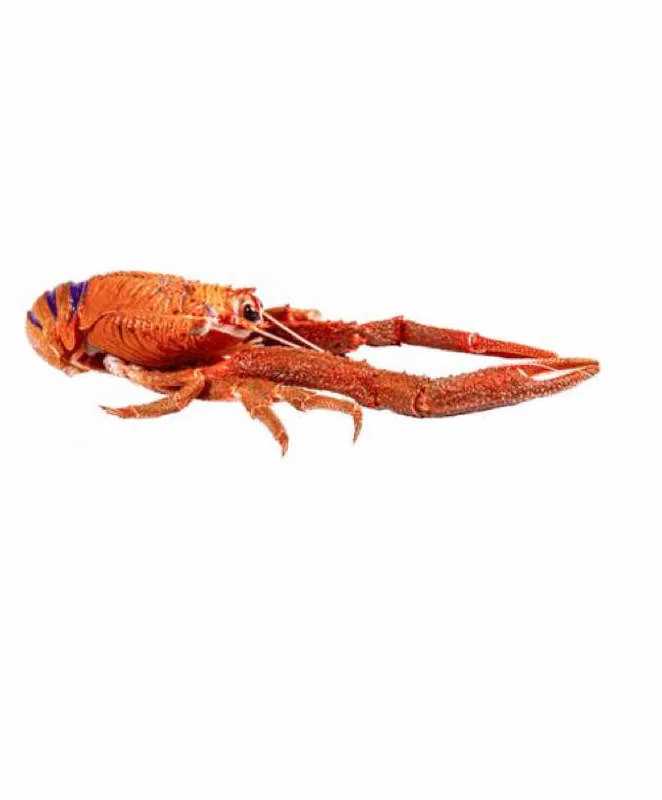
Langostino is the flagship crustacean in Antartic Seafood's portfolio. We process red langostino (Pleuroncodes monodon) and yellow langostino (Cervimunida johni) caught by our own fleet off the Coquimbo region.
Products are available shell-on (cooked or raw) and peeled (tail meat), packed IQF in retail bags or bulk cartons for food service. Manual peeling preserves structural integrity and sensory quality.
All raw material originates from MSC-certified fisheries. The plant operates under HACCP and FSSC 22000 v6, with SERNAPESCA oversight at landing and discharge.
Applications & formats
Retail
IQF bags with consumer-ready portions for supermarket seafood counters and frozen aisles.
Food service
Bulk cartons of peeled tail meat for restaurants, catering and ready-meal manufacturers.
Industrial
Shell-on product for further processing, flavour extraction and ingredient applications.
Available formats
| Cooked | Brought to a validated core temperature before freezing, so the product needs only thawing and tempering before service. Cooking is a HACCP critical control point with recorded time and temperature. |
|---|---|
| Shell-on | Frozen in the shell, cooked or raw to specification. The shell protects texture during freezing and transport, and is preferred where the shell is part of the presentation. |
| Peeled / tail meat | Shell removed, leaving ready-to-use meat. Removes labour from the buyer's kitchen and is the usual format for ready meals and ingredient supply. |
| Tails | Tail sections separated from the body, the highest-value cut of the animal and the standard trading unit for lobster programmes. |
Freezing & cold chain
IQF — individually quick frozen — Each piece is frozen separately, so the pack pours freely and the buyer can weigh out any quantity without thawing the rest. Preferred for retail packs and portion-controlled food service.
Product is held at −18 °C or below from the freezer through cold storage, container stuffing and transit, with continuous temperature monitoring. Reefer containers are pre-cooled before loading and a temperature recorder travels with the shipment so the buyer can verify the chain on arrival.
Packing & export documentation
Glaze percentage, inner-bag format, carton weight and pallet configuration are agreed in the purchase specification before the first production run. Every shipment travels with a commercial invoice, packing list, bill of lading, health certificate and certificate of origin; catch certificates and any destination-specific attestation are issued where the importing market requires them.
Every line runs under the same programmes: MSC fishery certification (MSC-F-31264) and MSC Chain of Custody (MSC-C-55732), FSSC 22000 v6, ISO 9001, a validated HACCP plan and US FDA registration. Certificate copies are released during supplier qualification.
Related reading
Red vs yellow langostino: what actually changes for the buyer
Pleuroncodes monodon and Cervimunida johni are both sold as langostino. How they differ in yield, colour, texture and best end use, and what to write in your spec.
SourcingCold-water crustaceans: what the Humboldt Current changes
Why cold-water crustaceans differ from warm-water farmed shrimp in texture, colour, protein and traceability — and what a buyer should verify before switching.
SpeciesNylon shrimp: a buyer's guide to Heterocarpus reedi
What nylon shrimp is, how the deep-water species behaves in processing, which formats work, and how to write a specification that survives arrival inspection.
IngredientsAstaxanthin and crustacean meal: what aquafeed buyers should ask
How crustacean meal delivers natural astaxanthin, what the proximate analysis means, and the questions to ask before specifying it in an aquafeed or pet food formulation.
CertificationReading an MSC certificate: fishery vs chain of custody
Why an MSC fishery certificate and an MSC chain-of-custody certificate are different documents, what each proves, and how to verify both in the public register.
FormatsShell-on or peeled: costing the crustacean format decision
How to decide between shell-on and peeled crustacean formats using cost per usable kilo, labour, waste handling and retail presentation — not headline price per kilo.
Frequently asked questions
What langostino species do you export?
We process red langostino (Pleuroncodes monodon) and yellow langostino (Cervimunida johni) from MSC-certified fisheries off Coquimbo, Chile.
Is langostino available peeled?
Yes. We offer both shell-on and manually peeled IQF tail meat in retail and bulk food service formats.
Which markets do you supply?
We export primarily to the USA, Europe and China, with full documentation for each destination's import requirements.
Related products: Nylon Shrimp · Gamba · Crustacean Meal
Quote langostino for your market
Tell us the species, format, size grade and volume. We reply with specifications and a shipment proposal.